Gutter Guard Mesh for Homes with Solar Panels: What to Know Before Installation
A normal roof is one thing. A roof with solar panels is another.
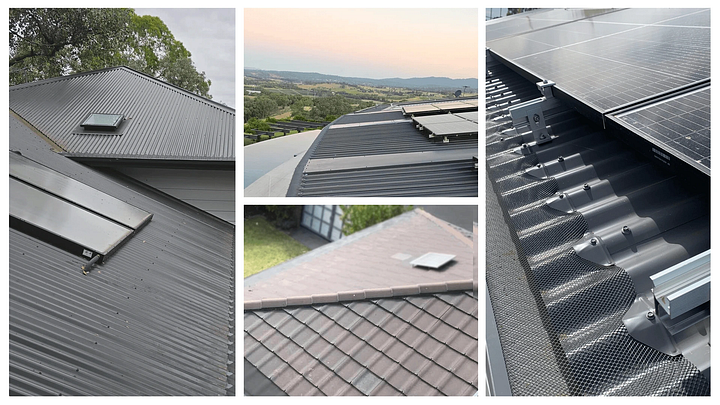
Solar panels can create tighter access points around the roof edge, valleys, and sections where debris likes to collect. That doesn’t mean you can’t install gutter guard mesh. It just means the job needs more thought. You’re not only trying to stop leaves getting into the gutters. You’re also trying to make sure the roof still drains properly, the system can still be maintained, and no one makes life harder for the next person who has to inspect the roof.
That matters in Australia, where official seasonal fire-safety advice still says to clean leaves and debris from roofs, gutters and downpipes, and to fit quality metal leaf guards where appropriate.
First thing to know: not every gutter guard mesh suits a solar roof
This is where people get caught.
They assume gutter mesh installation in Australia is a one-size-fits-all job. It isn’t. The right setup depends on things like:
- how close the panels sit to the gutter line
- your roof pitch
- the type of debris falling on the roof
- whether you’re in a bushfire-prone area
- whether your home is coastal
- whether you collect rainwater in a tank
- how much access is left for future servicing
On paper it sounds simple. On an actual house, it can get surprisingly specific.
I’ve seen roofs where the mesh itself was fine, but the panel placement made the final fit awkward. I’ve also seen the opposite. Great solar layout, but the wrong gutter protection system was chosen for the leaf load, and it just didn’t cope in heavy drop seasons.
Check panel placement before you choose the mesh
This is probably the biggest practical point.
Before installing gutter guard mesh, have someone look properly at where the solar panels sit in relation to the gutters. If the panels run very close to the roof edge, or if the brackets and cabling make access tight, the installer needs to plan around that. You don’t want a setup that looks good from the ground but becomes a pain every time the roof needs an inspection.
A lot of homeowners only think about whether the mesh will fit. The better question is whether the roof will still be serviceable after it’s fitted.
That part matters more than people realise. Solar systems still need occasional inspection, and any roof protection product should work with that, not against it. The Clean Energy Council also continues to emphasise approved products and strong consumer protection settings across rooftop solar installation in Australia.
The type of debris on your roof matters more than people think
Not all leaf problems are the same.
Big dry leaves are annoying, sure, but sometimes the real issue is the finer stuff. Pine needles, jacaranda petals, blossom, bark strips, seed pods, and gritty dirt can be worse because they build up slowly and people don’t notice until water starts going where it shouldn’t.
That’s why choosing metal gutter guard mesh is usually less about “Will it stop leaves?” and more about “What exactly falls on this roof all year round?”
A home under heavy gum trees will behave differently from a home near jacarandas. A coastal roof deals with salt and corrosion. A house with solar panels and limited roof access needs a setup that reduces ongoing maintenance, not one that just shifts the mess around.
Aluminium or stainless steel? This is where practicality wins
In my experience, people often focus on price first and material second. I get it. Roofing jobs add up quickly. But on a solar home, material choice matters.
CPR Gutter Protection highlights aluminium and stainless-steel mesh as common high-durability options, with corrosion resistance and suitability for harsh Australian conditions being a big part of the conversation.
That lines up with what most sensible homeowners eventually figure out anyway:
- Aluminium gutter guard mesh can be a strong option for many homes, especially when you want a neat, low-profile finish.
- Stainless steel gutter guard mesh is often worth looking at where durability, ember protection, or harsher conditions are part of the picture.
- Cheap mesh usually looks alright in the quote and less alright after a few seasons.
That last part is not technical language. It’s just true.
Don’t ignore water flow just because the mesh “fits”
These causes real headaches.
A mesh can technically fit your gutters and still not perform well in heavy rain if the roof, pitch, edge detail, or debris pattern hasn’t been thought through properly. On solar homes, water movement can already be a bit different depending on panel layout and how runoff tracks across the roof.
A decent gutter cover or leaf guard mesh should help water enter the gutter while keeping debris out. But if the product choice or installation angle is wrong, you can end up with overshoot, splash, or dirty run-off where you least want it.
And once that starts happening around a roof with solar, people often blame the panels, when really it’s a drainage and protection issue.
Bushfire areas need extra care
This is not something to gloss over.
If you’re in a bushfire-prone area, your roof debris is not just a maintenance issue. It can be part of your fire risk. CPR’s own guidance points out that gutter guard mesh can play a role in ember protection when the product and aperture are suitable, and government energy advice also stresses the importance of clearing leaf litter and fitting quality metal leaf guards as part of seasonal fire preparation.
So if your house has solar panels and sits in a high-leaf or bushfire-exposed area, don’t treat roof gutter protection like a cosmetic add-on. It’s part of making the roof safer and easier to manage.
Rainwater tanks? Then cleaner gutters matter even more
A lot of Australian homes with solar also have tanks. That combination makes sense. People are trying to make the house more efficient overall.
If that’s your setup, gutter guard mesh can help reduce the amount of leaf litter, bird mess, and organic debris entering the system. CPR also notes gutter guards can support cleaner rainwater harvesting by reducing organic contamination in gutters before water reaches the tank.
It’s not magic. You still need occasional checks. But it can make the whole roof-to-tank setup a lot less grubby.
A mistake I see often: solar first, roof planning later
This happens all the time.
People organise the solar company, focus on rebates and system size, and then only later start thinking about the gutters, valleys, trees, and roof maintenance. I’m not saying that’s wrong. It’s just common. But it does mean some households end up paying twice for roof access headaches that could’ve been sorted in one plan.
If you haven’t installed solar yet, it’s worth thinking about gutter protection for solar homes before the panels go on.
If your solar is already installed, don’t panic. Just make sure whoever quotes the gutter guard mesh installation understands how to work around solar arrays without turning future servicing into a nightmare.
What to ask before installation
Before you say yes to any gutter guard mesh Australia quote, ask:
- Will this mesh suit the kind of debris my roof gets?
- How will it work around the solar panels?
- Will future roof or solar maintenance still be manageable?
- Is the mesh material suitable for my area, especially if I’m coastal or bushfire-prone?
- How does the system handle heavy rain?
- Will it help reduce build-up in valleys and around the gutter edge?
- Does the installer understand both roof drainage and solar access?
You don’t need to sound technical. You just need straight answers.
Is gutter guard mesh worth it on a solar home?
Honestly, in many cases, yes.
Not because it means “never clean your gutters again”. I don’t love that promise and I never really trust it. Real roofs still need checking. Storms happen. Birds are persistent. Fine debris still exists.
But on homes with solar panels, a good gutter guard mesh setup can reduce the amount of debris getting into the gutters, make maintenance less frequent, lower the chance of overflow problems, and cut down the hassle of working around the solar array later.
That’s usually the real value. Less mess. Less risk. Less time messing around on ladders wondering why nobody planned this earlier.
Final thoughts
If your roof has solar panels, don’t choose gutter guard mesh Australia like it’s a separate little add-on. Think of it as part of the full roof system.
Because once the panels are up, the easy access is gone. And from there, every gutter problem becomes just a bit more awkward, a bit more expensive, and a bit more frustrating than it used to be.
A well-chosen gutter guard mesh won’t solve everything. But it can save you from a lot of avoidable nonsense later.
And honestly, that’s usually what people want. Not perfection. Just fewer roof problems, fewer clean-outs, and one less job hanging over their head every time the weather turns.
Visit Us: https://www.cprgutterprotection.com.au/


Comments
Post a Comment